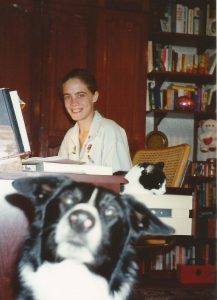
In 1998 I did my first interview for a women’s weekly – I nervously flew up to Scotland to interview a dominatrix who was upset because other mums were blanking her at the school gate. She was lovely – she made me a cheese sandwich and gave me a blue crystal “which aids communication” before explaining how she divided her time between school runs and dribbling hot wax on men’s chests. As first interviews go it could have been far, far worse.

The actual crystal – not sure if it has aided communication but I’m quite attached to it.
Since then I’ve done too many real life interviews to count – I’ve spoken to Elvis impersonators, shagging DJs, lifesaving surgeons, campaigning mums and survivors of domestic abuse. And before each one I’m still nervous. Because until you pick up the phone you have no idea what sort of person you’ll be speaking to. However experienced an interviewer you are, each individual is unknown territory.
And then it’s up to me – the interviewer – to tread the path between what the editor wants, what the interviewee thinks their story is and the truth of the story itself. Get it right and everyone will be happy. Getting it wrong is unthinkable.
Over the years I’ve come up with a few rules to cling to as I head into this wild, wild west situation, so here’s a rough guide from a true life hack…
Get chatting
What makes a story come to life is the characters in it – how did they spend Saturday nights? What’s their favourite takeaway? What makes them laugh? Those are the details which, if cleverly woven in, make a person seem more real, gets the reader rooting for them. So before you jump into the narrative – the when, where how of what happened, take some time to ask about the people involved and what they are like.
Carry the details through
As you gather these details, squirrel them away in your mind and bring them up again later. One young woman I interviewed used to love watching The 100 with her father. Later, when she was struggling to talk about how it felt after he passed away I had some tangible questions to ask her. What was it like watching the show without him? How did it feel to hear his favourite song, watch his football team win? These sound like cruel questions but people respond well to them – it’s difficult to express grief but this gives them a framework for doing it and prompts new stories to come into their minds. That kind of detail also makes it feel more real for the readers without having to resort to cliches.
Avoid talking about yourself
Except in the rarest of cases, this kills the conversation stone dead – especially with celebrities. It’s fine to say something like “oh yes, I’ve got two kids as well, they can be a right handful, can’t they?” But once you start regaling them with tales of Little Johnny’s behavioural issues it changes the dynamic of the chat and leaves the interviewee floundering.
Sweat the small stuff
When people are describing something you can both get swept away on the narrative, then when you go to write it up you realise you’re missing a vital detail. “Then he threw a knife at me,” she says. You’re so shocked and sympathetic that you forget to ask where he got the knife from, whether it was a big scary carving knife or a butter knife, where it landed. Sometimes you have to break the flow to ask this crappy, horrible, unpleasant stuff. If you can’t break the flow, write a note to yourself to ask about it later in the conversation. No, it’s not nice but if you’re going to write a true reflection of what happened you have to know where things are.
Dates, dates dates.
The same goes for when things happen. Before you write a feature create a timeline of events and fill it in as you go – then refer back to it when you’re writing.
Check spellings
I shouldn’t even have to mention this, but I will. There are about eight different ways to spell Tracy.
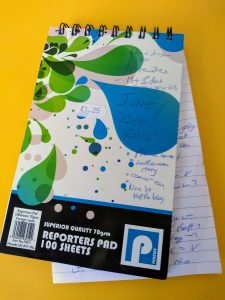
If this was a proper blog, this would be a beautiful handmade notepad with a unicorn pen.
Check your voice recorder. Then check it again.
Once my voice recorder ran out of battery half way through an interview with Julie Walters. It was one of the most mortifying moments of my life – to the extent that I’m ashamed to even admit it here, years later. Sure, I have shorthand but I find my notes don’t capture the nuance of the conversation as well, and it’s a bitch to decipher. The PR had to record the rest of the chat on her iPhone and email it over to me – I was so embarrassed I never told anyone in the office what happened. Since then before every interview I’ve checked the battery life and available memory on my trusty Olympus.
Get some playback software
Words cannot express how much I hate transcribing, speech-to-text software is hilariously bad and most commissions don’t pay well enough to pay a transcriber. So recently I downloaded some playback software to my computer. It’s not perfect but it allows you to slow down, speed up and play back small sections over and over until you’ve figured out what that vital mumbled word actually was.
Respect your interviewee
This person might have done things you would never consider doing in a million years. He or she might live a life you disapprove of or disagree with or just don’t get. None of that matters. It’s up to you to get into their heads and understand why they got that tattoo of Donald Trump on their face. In my day-to-day life almost everyone I meet in real life looks like me, thinks like me and often agrees with me so it’s good to see things from a different point of view and get the chance to meet some amazing people I’d never otherwise talk to. And I get paid for it too! Result.
 1: They had a Very Good Idea. You know, just like the one that’s floating round your head at the moment that would be an absolute best seller if only you could find the time to write it all down.
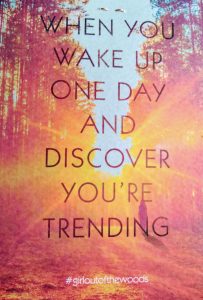 For the first sixteen years of her life, Arty lives in paradise. She, her parents and a group of idealists have built a small community in a clearing in the middle of the Indian forest. It’s not an easy life but it’s a happy one – a matriarchal society where every community member is a god or goddess, decisions are made by consensus and her biggest worry is whether the monkeys are going to steal their food.
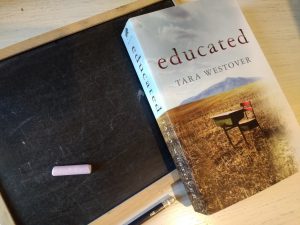 in the remote countryside and it’s absolutely fascinating. School was banned, traditional medicine was forbidden, the End of Days was always around the corner and violence was an everyday occurrence. As she grows up Tara faces a choice – remain loyal to her father despite growing doubts about his views or educate herself and alienate the family she loves.
 Over a thousand years ago out in the Northumberland countryside a girl was sacrificed: kicked, beaten, tortured and finally buried in the bog by her family, her friends and the people she had grown up with. How could a community turn on someone like that, and why?
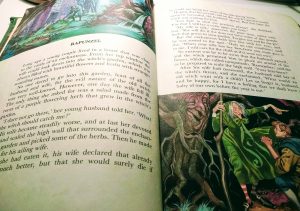 Bluebeard’s chamber was full of the corpses of his former wives, characters are blinded, torn apart by wild animals. It’s worse of course if you’re the stepmother. You could be tricked into eating the minced-up body of your own daughter, rolled down a hill in a barrel lined with nails or, if you were foolish enough to be cruel to Snow White, you could end up with your feet being forced into red-hot iron shoes and dancing yourself to death.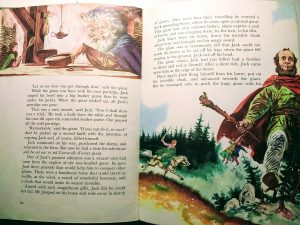
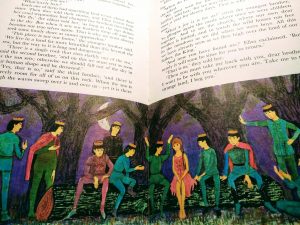 creatures from her grandmother’s tales might not be fictitious after all.
 It’s a hugely accomplished book for a debut author, beautifully written and atmospheric. The heroine is tough, scrappy and flawed – although her anger issues are more talked-about than experienced, it would have been fun to explore them more. I had a bit of a crush on her sidekick, Ellery Finch. I’m not at all surprised that the film rights have been sold already.
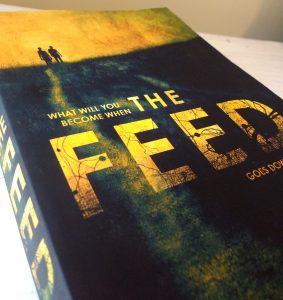 This is a fantastic Black Mirror-esque idea for a tale and the hook dragged me in straight away, but at first I did find the book a little frustrating. I wanted to know more about the Feed and the mysterious Taken people and less about the post-apocalyptic mess which followed its collapse. And I couldn’t quite warm to Tom and Kate, the nice middle class couple caught up in it all as they search the countryside looking for their missing daughter. I also didn’t truly buy into the idea that almost everyone on the entire planet – rich and poor, developing and developed world – had the feed in their brains. What about the underclass who could never afford it – they’d really come out on top in this world… But that’s probably another story.
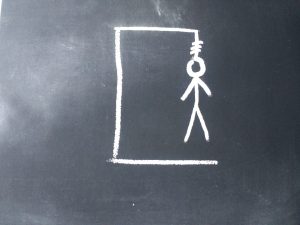
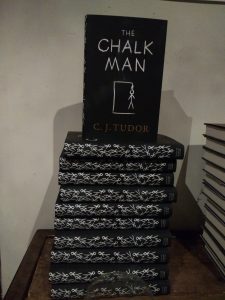 month teeming with twisty tales. It’s a brilliantly original idea: in the 1980s a gang of kids use chalk figures to communicate with each other. It’s all innocent, although somewhat creepy-looking fun until the day the chalk figures lead them to a body hidden in the woods. Thirty years later the gang has moved on, but has to confront the past when the figures start appearing again…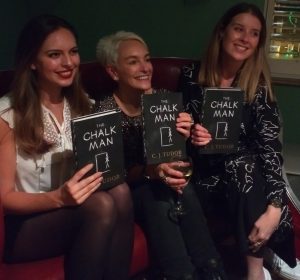
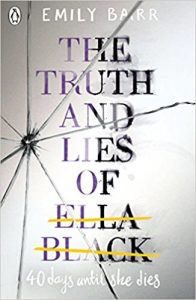 Ella Black is a good girl, to the point of boring. She studies hard, she keeps her head down and the craziest thing she’s ever done is dye her hair purple. But the reason she’s so good is that she has an alter-ego – the violent, destructive Bella. The first time Bella makes an appearance she does something so shocking I almost dropped the book and it’s clear why Ella needs to keep on the straight and narrow and keep Bella under control.