
It’s easy to slag books off. I do it all the time – as a reviewer I see lots of not-very-good books: novels which are cynical imitations of another title which did quite well a few years ago, novels written to a formula, novels cranked out when the writer had a deadline but was struggling for inspiration. And everyone’s favourite punching bag, Fifty Shades of Grey. It’s fun to slag off books and as a wannabe author it’s encouraging – if this load of old twaddle can get published, so can I. So yes, I do it, I’m only human.
But it’s also deeply wrong and unfair, because every non-celeb person who has ever had a book published deserves huge respect for beating the odds. They have been through at least a dozen agonising and increasingly Hunger Games-esque stages to get there…
 1: They had a Very Good Idea. You know, just like the one that’s floating round your head at the moment that would be an absolute best seller if only you could find the time to write it all down.
2: They had a Second Very Good Idea which gave the initial Very Good Idea wings. Boy goes to wizard school has potential, but Orphaned boy goes to wizard school where he discovers a dark link between himself and the powerful wizard who murdered his parents is the start of a seven-book series.
3: They found the time to write it down. Hours. Days. Months. In the middle of the night, getting out of bed at 5am, punching it out with their thumbs on their iPhone on a commute. Or even giving up their jobs. Despite all the crap going on in their lives, they found the time.
4: They didn’t give up when they got 30,000 words in and realised that the Second Very Good Idea actually doesn’t work at all unless they go back and unpick everything that happened after Chapter Two. Instead, they went back and unpicked. Or they replaced the duff Second Idea with a shiny new Third Very Good Idea which made it even better.
5: They wrote 60,000 to 150,000 words about Very Good Ideas One and Two (or Three.) It might not be in a genre you like, it might be too light and fluffy or too flabby and pretentious but they wrote the words down. A story now exists where there was none before.
6: Then they edited, going through the whole thing until they were sick of the sight of it, rejigging it, taking bits out, regretting it, putting them back in. They cut things they loved, sliced out whole characters and wrote entirely new scenes instead, all the while not truly knowing whether they were making the thing better or worse.
7: They then sent it to agents. Dozens of ‘em. They received rejection email after rejection email until they wondered whether the Very Good Idea was actually Utter Tripe Idea in disguise. Maybe they took too long writing it and nobody wants dystopian YA stories any more, or a major plot point has been wiped out by the invention of Google Maps. Or maybe they just wasted an immense amount of their time and passion on something nobody wants to read. This could happen, and does – all the time. But if it doesn’t…
More bashing into shape ensues
8: An agent actually picks it out of their slush pile of hundreds, is moved by the words, blown away by VGIs One and Two, and signs them up. More editing ensues. Author and agent eventually agree that book is in good shape. Hooray!
9: Said agent believes in the book enough to haul it all around town to different publishers, or even take it to a book fair and say: “Buy my client’s book, it’s great and it will make money for you.”
10: In order to get a book deal, the author then has to cage fight JK Rowling using only a copy of The Writers’ & Artists’ Yearbook as a weapon. Oh wait, no, that’s just a weird dream I had.
10: A publisher sees the book, likes it and thinks that this is a Very Good Idea, which will possibly make money for them.
11: The publisher then introduces an editor into the mix who undertakes more Bashing Into Shape along with the author who is probably feeling pretty bashed themself by now. Once they’re happy, they haul it around town to the booksellers and supermarkets, convincing them that the author has had a Very Good Idea and that they, too could make money from it.
12: It has been years since the author had the Very Good Idea but it’s stood the test of time, it’s on the shelves. Now the author, the publisher and booksellers all join forces to convince us – the reading public – that the Very Good Idea is worth spending the price of a cup of coffee on.
What a way to make a living!
Seriously, it’s ridiculous, but that’s the way it works in traditional publishing. So to get your book onto shelves and into people’s hands takes an astonishing amount of faith in yourself and your idea, extraordinary discipline and commitment plus a rhino-like skin to deal with all those rejections and edits along the way. So anyone who has ever, ever had anything published is an utter hero. I salute you. And one day, glutton for punishment that I am, I hope to join you.
 For the first sixteen years of her life, Arty lives in paradise. She, her parents and a group of idealists have built a small community in a clearing in the middle of the Indian forest. It’s not an easy life but it’s a happy one – a matriarchal society where every community member is a god or goddess, decisions are made by consensus and her biggest worry is whether the monkeys are going to steal their food.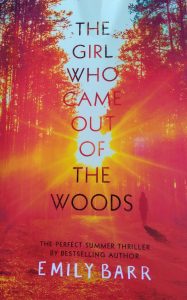
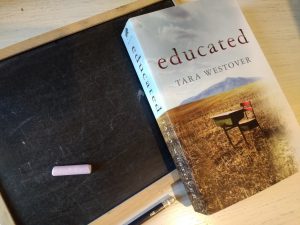 in the remote countryside and it’s absolutely fascinating. School was banned, traditional medicine was forbidden, the End of Days was always around the corner and violence was an everyday occurrence. As she grows up Tara faces a choice – remain loyal to her father despite growing doubts about his views or educate herself and alienate the family she loves.
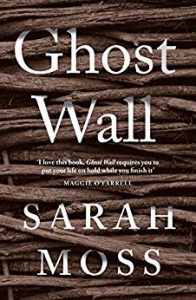 Over a thousand years ago out in the Northumberland countryside a girl was sacrificed: kicked, beaten, tortured and finally buried in the bog by her family, her friends and the people she had grown up with. How could a community turn on someone like that, and why?
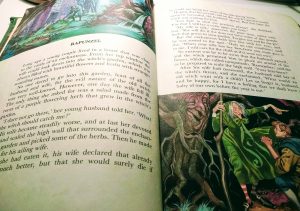 Bluebeard’s chamber was full of the corpses of his former wives, characters are blinded, torn apart by wild animals. It’s worse of course if you’re the stepmother. You could be tricked into eating the minced-up body of your own daughter, rolled down a hill in a barrel lined with nails or, if you were foolish enough to be cruel to Snow White, you could end up with your feet being forced into red-hot iron shoes and dancing yourself to death.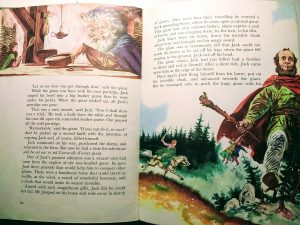
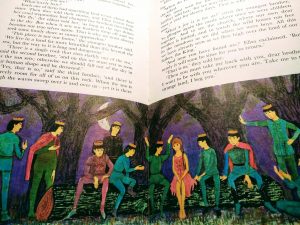 creatures from her grandmother’s tales might not be fictitious after all.
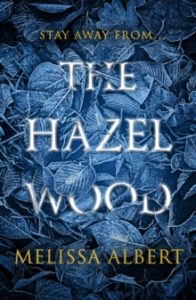 It’s a hugely accomplished book for a debut author, beautifully written and atmospheric. The heroine is tough, scrappy and flawed – although her anger issues are more talked-about than experienced, it would have been fun to explore them more. I had a bit of a crush on her sidekick, Ellery Finch. I’m not at all surprised that the film rights have been sold already.
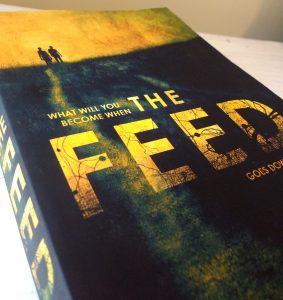 This is a fantastic Black Mirror-esque idea for a tale and the hook dragged me in straight away, but at first I did find the book a little frustrating. I wanted to know more about the Feed and the mysterious Taken people and less about the post-apocalyptic mess which followed its collapse. And I couldn’t quite warm to Tom and Kate, the nice middle class couple caught up in it all as they search the countryside looking for their missing daughter. I also didn’t truly buy into the idea that almost everyone on the entire planet – rich and poor, developing and developed world – had the feed in their brains. What about the underclass who could never afford it – they’d really come out on top in this world… But that’s probably another story.
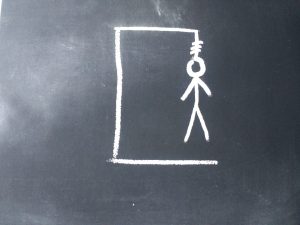
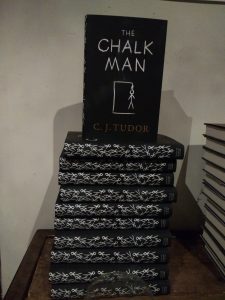 month teeming with twisty tales. It’s a brilliantly original idea: in the 1980s a gang of kids use chalk figures to communicate with each other. It’s all innocent, although somewhat creepy-looking fun until the day the chalk figures lead them to a body hidden in the woods. Thirty years later the gang has moved on, but has to confront the past when the figures start appearing again…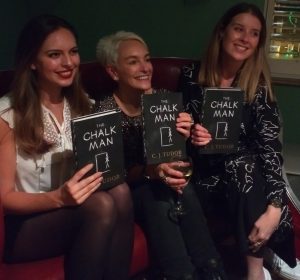
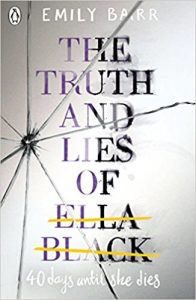 Ella Black is a good girl, to the point of boring. She studies hard, she keeps her head down and the craziest thing she’s ever done is dye her hair purple. But the reason she’s so good is that she has an alter-ego – the violent, destructive Bella. The first time Bella makes an appearance she does something so shocking I almost dropped the book and it’s clear why Ella needs to keep on the straight and narrow and keep Bella under control.
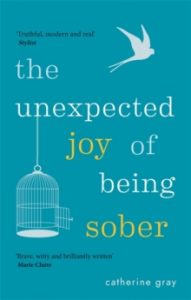 rolling in late and taking Mondays off sick. It explained all the mysterious bumps and bruises and injuries. It explained why the features team used the words “totally Cathed” as a euphemism for steaming drunk. And now I understood why, on our way out of a work Christmas party, I’d had to stop Cath jumping into a limo full of men on a stag.